Where they started
Founders know their subject better than anyone but cannot turn it into consistent content, and generic AI writing tools make them sound like everyone else. DailyMuse set out to change that with a voice-first tool: talk through your day for five minutes and get drafts that still sound like you.
We hold UX conversations with the founders who use the product and repeat them as it grows, and we mapped the AI writing tools and ghostwriting services they had already tried. The position is simple: your real thinking, captured in conversation, not prompts. The voice follows it, direct, specific and evidence-based, with no hustle vocabulary and no promise that the work is effortless.
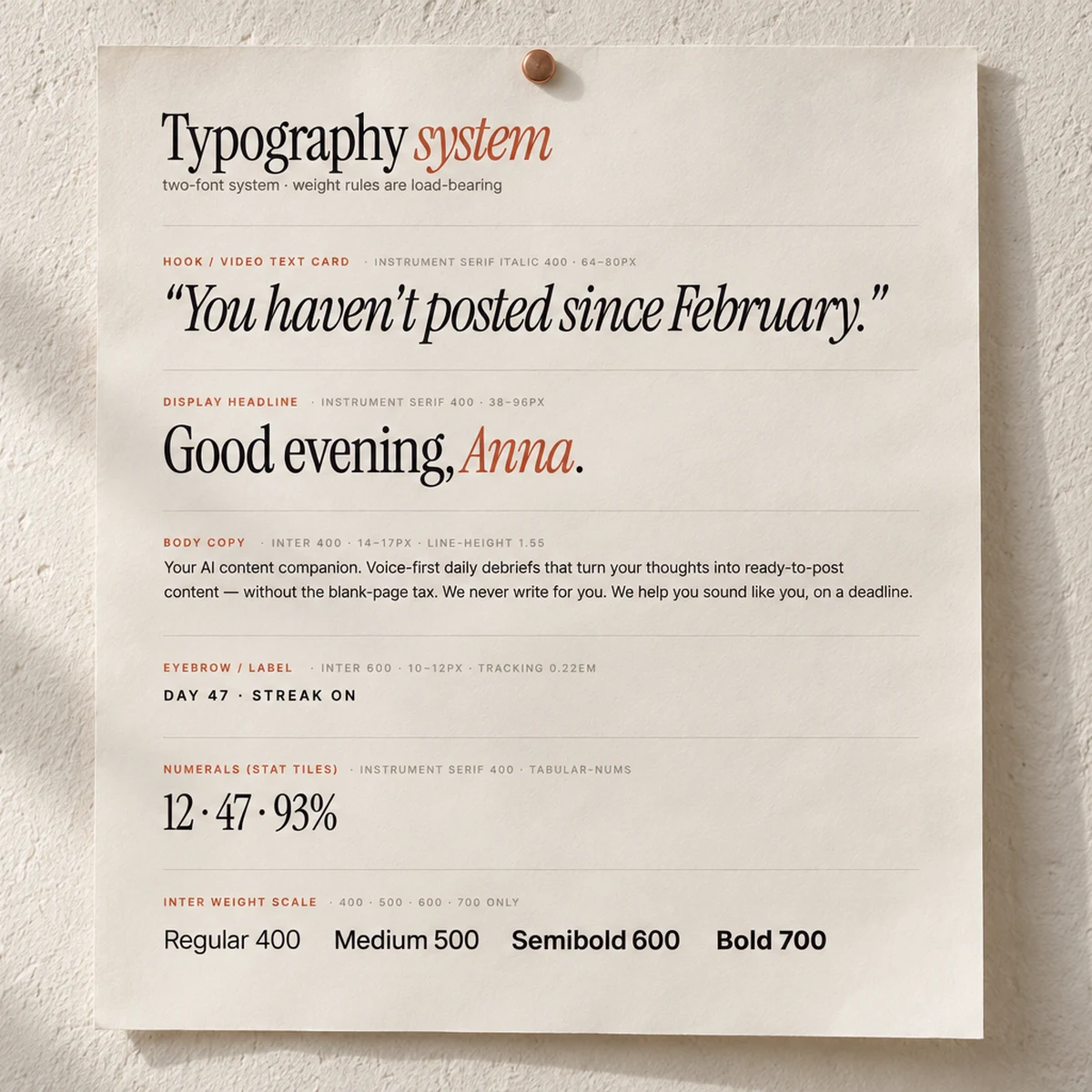
An editorial identity for an audience that is allergic to marketing aesthetics: cream, ink and terracotta copper instead of SaaS blue, with copper kept to a small accent in every layout. Instrument Serif sets the headlines, with italic reserved as the voice marker for a name or a single word, and Inter carries the text. The mark is a waveform, a spoken thought turned into a sign. Pitch materials and support for investor conversations were built in the same system.

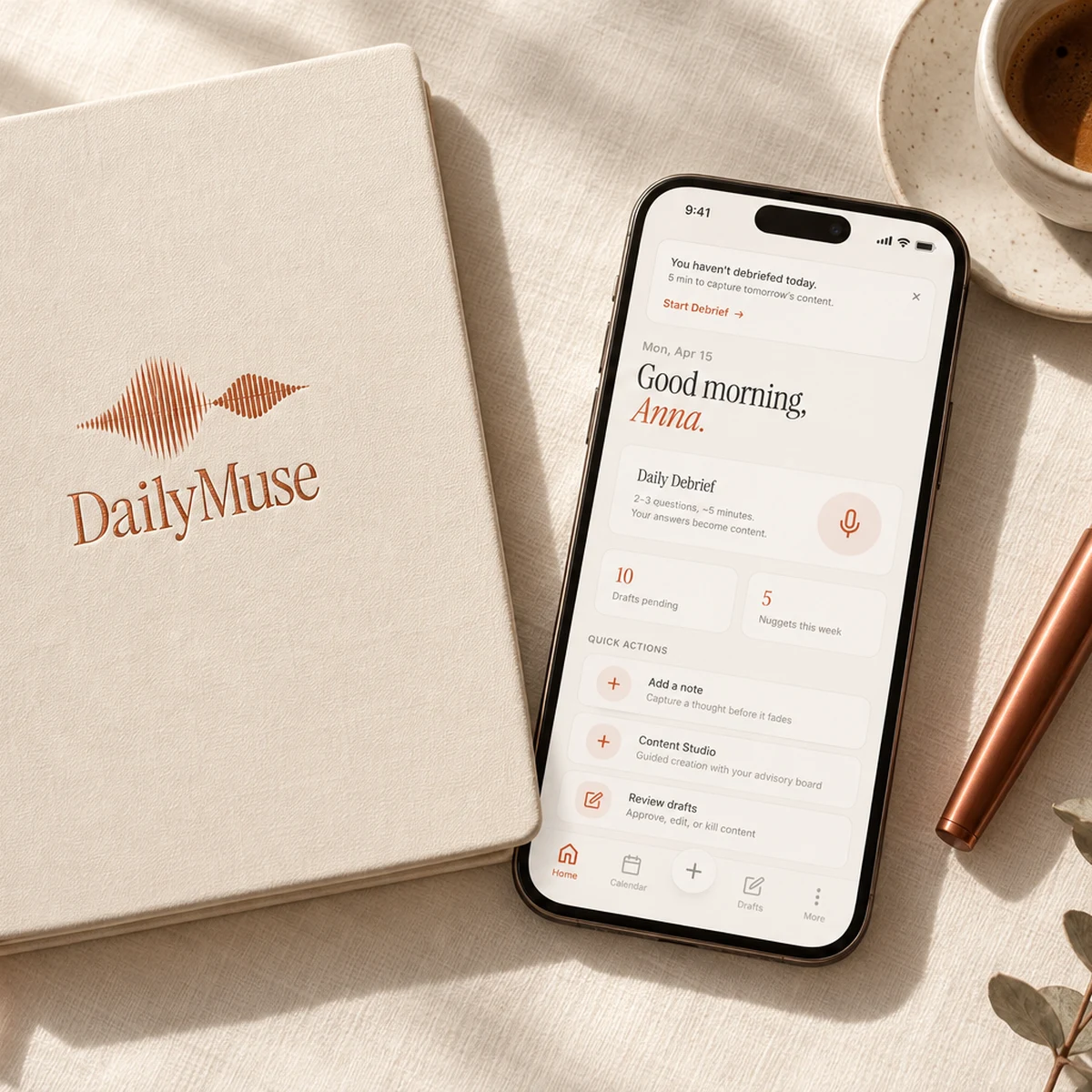
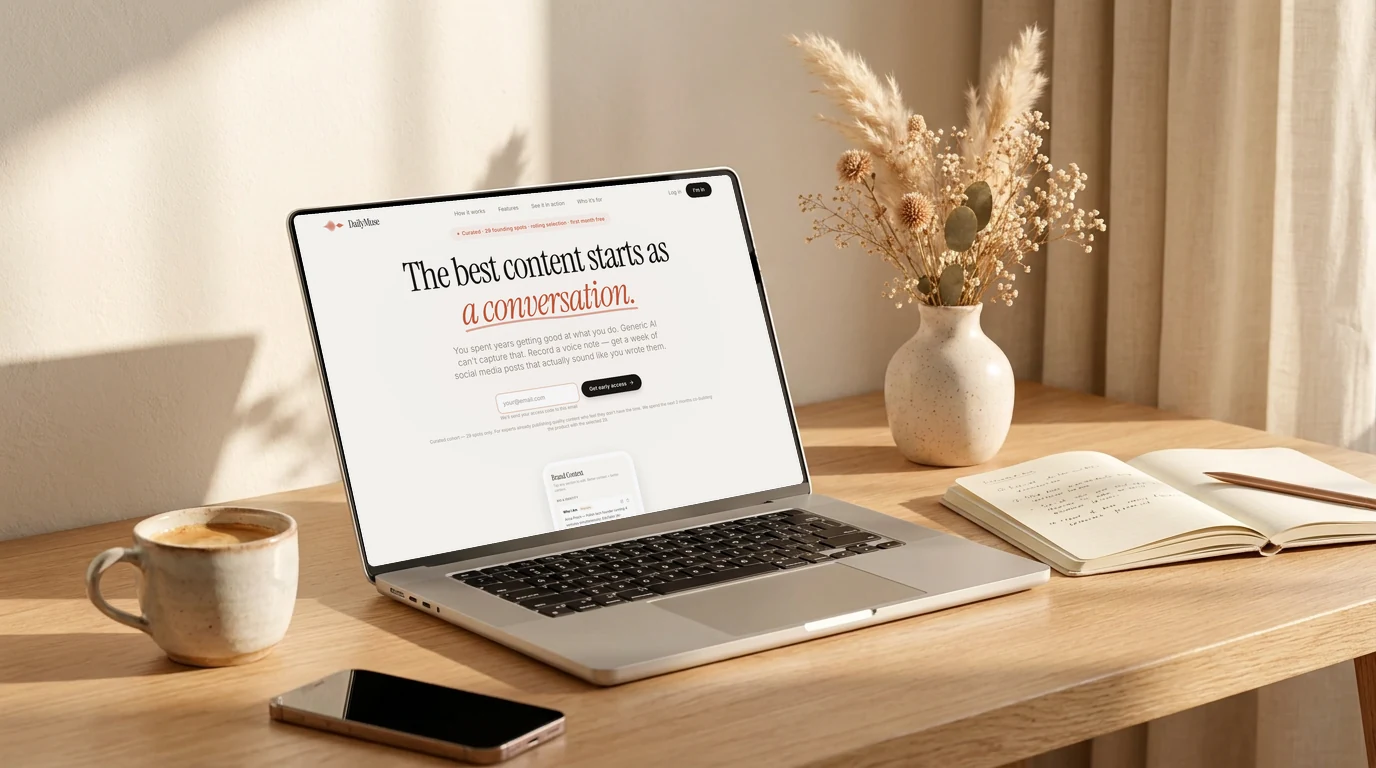
A conversion landing page, shipped together with the brand in two weeks. It tells one before and after story: 45 minutes at a blank screen against 5 minutes of talking.
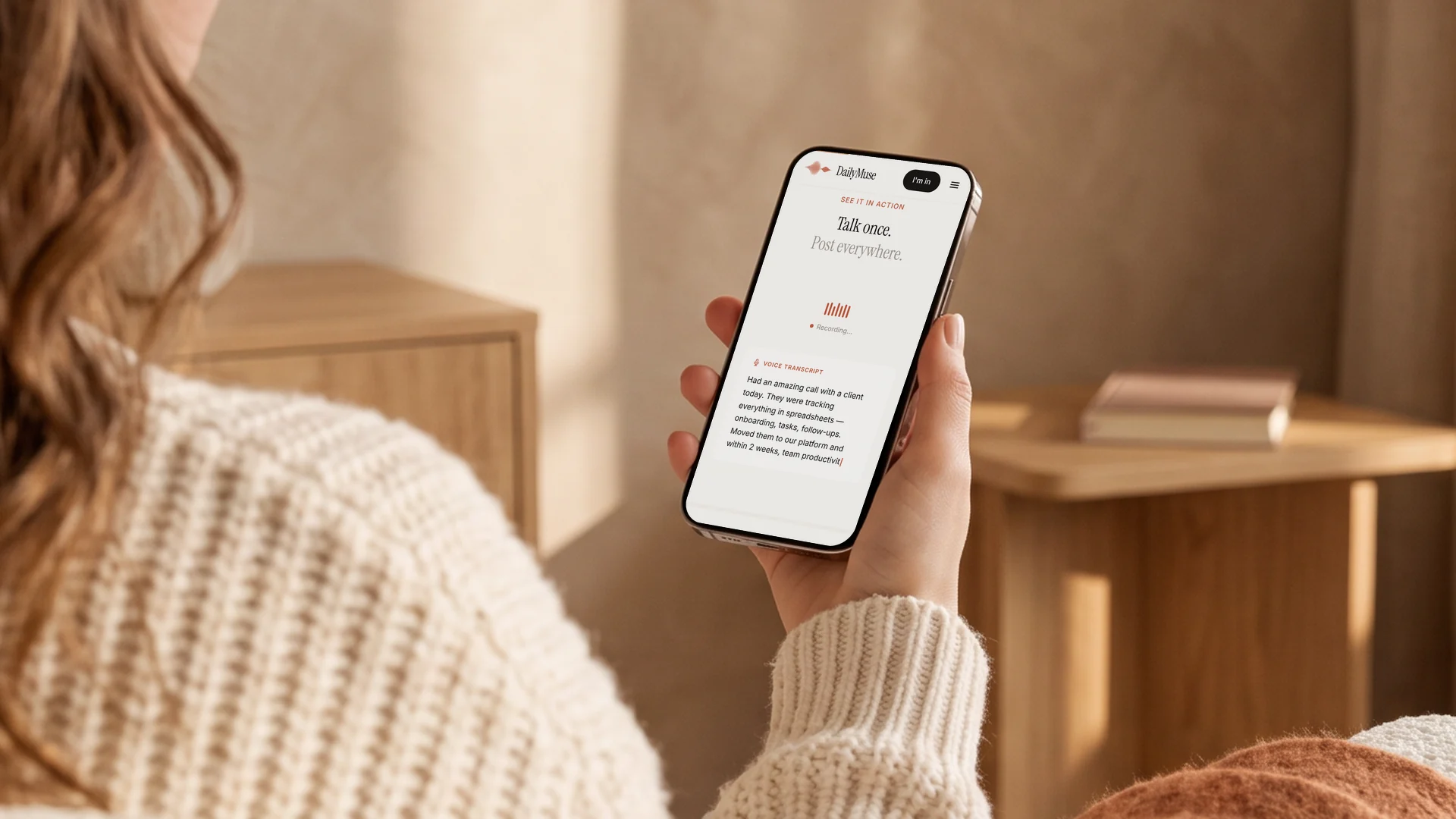
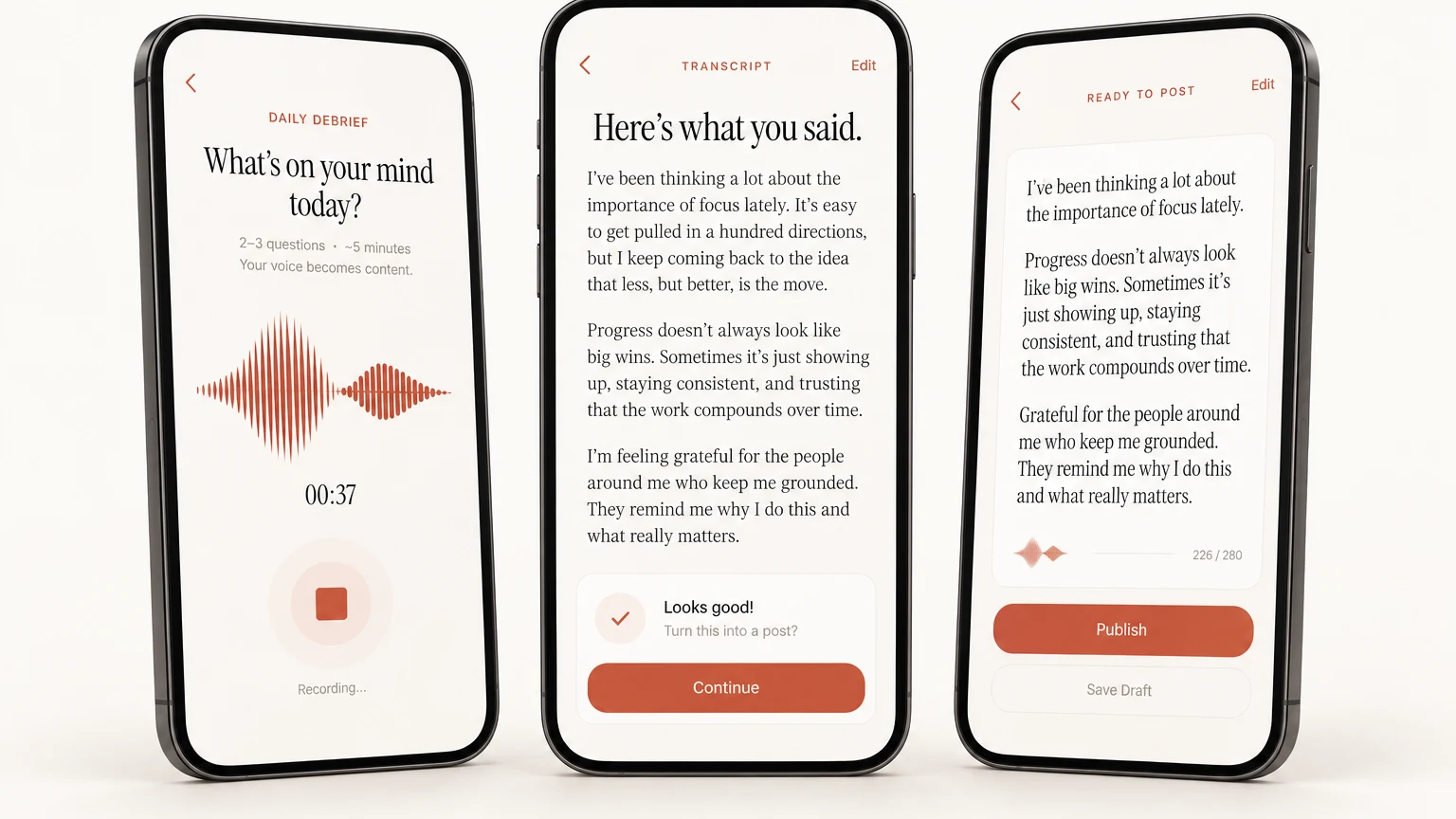
The first version of the application shipped in about four weeks. At its centre are the guided Daily Debrief and a four-step content pipeline, with a Content Studio, an AI Advisory Board of eight personas, Brand Intelligence, a calendar, analytics and coaching around them. Our dedicated team keeps improving it with its first users and the founders.
Outcome
A product ready to show to investors and early users, with a difference anyone can hear: the content sounds like the founder, not like generic AI. Every release is shaped by the people who use it.
- landing page conversion, organic traffic only
- 12.4%
- selected founders co-developing the product
- 29
Conversion measured in DailyMuse’s own analytics in the first three weeks of the beta.